Table of Contents
ToggleDoes Insurance cover Spravato?
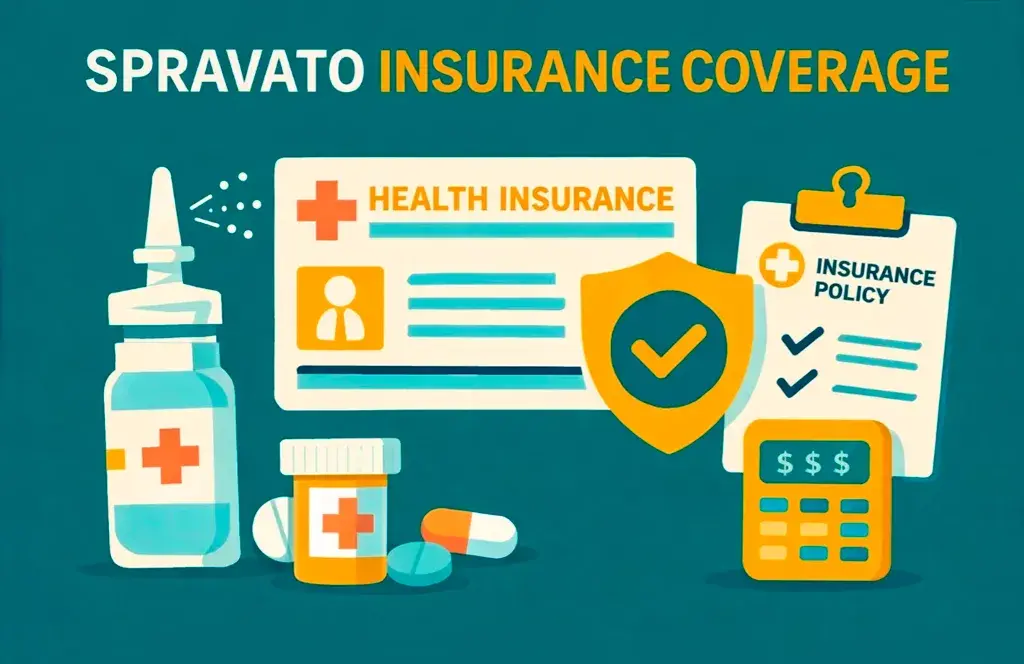
Spravato covered by insurance is possible in many cases, but only under specific conditions that vary by payer. Coverage does not mean automatic approval, immediate access, or zero patient cost responsibility. Understanding what “covered” actually means prevents surprise denials when clinical documentation doesn’t meet payer standards.
Coverage is most likely when:
- The patient has documented a TRD diagnosis with failed trials of two different antidepressant classes at adequate doses.
- Provider submits a complete prior authorization with validated assessment scores showing depression severity and treatment history documenting failed therapy attempts.
- Administration occurs at a REMS-certified facility meeting all network requirements and safety protocols.
- Clinical documentation demonstrates medical necessity aligned with specific payer policy criteria.
- Billing codes accurately reflect the approved benefit pathway for medication and services.
Even with these conditions met, patients typically face deductibles ranging from hundreds to thousands of dollars, copays per session, or coinsurance percentages. “Covered” means the insurance plan recognizes Spravato as potentially reimbursable, not that patients owe nothing.
How Spravato Insurance Coverage Actually Works
Medical Benefit vs Pharmacy Benefit Coverage
Spravato covered by insurance may fall under either medical or pharmacy benefits, depending on the insurance plan design. This distinction fundamentally affects how claims are submitted, which provider entities bill, and how reimbursement processes are handled.
| Benefit type | What it typically covers | Why it matters for billing |
| Medical benefit | Provider-administered drugs and observation | Facility billing with bundled codes |
| Pharmacy benefit | Medication cost only | Separate billing for drug and provider administration |
Most commercial payers cover Spravato under medical benefits, treating each session as an outpatient treatment. Some plans route coverage through pharmacy benefits, requiring medication claims to be processed separately from professional services. The benefit pathway determines which codes to use, how to document services, and where claims are adjudicated. Billing under the wrong pathway triggers automatic denials even when clinical care is appropriate.
Why REMS-Certified Settings Affect Coverage
Spravato insurance coverage is explicitly tied to Spravato being administered in REMS-certified settings with proper patient monitoring protocols. This federal safety requirement becomes a coverage requirement – non-certified locations or missing REMS documentation trigger denials even when the medication itself is covered under the patient’s insurance plan.
REMS certification ensures facilities maintain specific safety protocols, provider training standards, and patient monitoring capabilities during treatment and observation periods. Insurance companies verify REMS status during prior authorization reviews and may periodically audit compliance. Claims from non-certified locations are categorically denied regardless of clinical appropriateness or medical necessity.
Missing REMS documentation – such as incomplete patient monitoring forms or lapsed facility certification – creates reimbursement problems even for established patients. Provider practices must maintain current REMS certification and submit required monitoring documentation within specified timeframes to sustain ongoing coverage eligibility.
Standard Insurance Requirements for Spravato Coverage
Diagnosis and Medical Necessity Criteria
Insurers require a documented depression diagnosis, specifically TRD or major depressive disorder with acute suicidal ideation. The TRD diagnosis must include evidence of failed prior attempts with adequate doses of at least two different antidepressant classes.
Justification involves submitting baseline depression assessment scores using validated instruments like PHQ-9 or MADRS. These scores establish severity and track response throughout care. Without baseline assessments, insurers cannot evaluate medical necessity or measure improvement.
Prior history must include specific medications tried, doses, duration, and reasons for discontinuation. Detailed pharmacy records or prescriber notes demonstrating adequate trials are essential for coverage approval.
Prior Authorization and Step Therapy
Prior authorization is nearly universal for Spravato insurance coverage. Practices submit detailed information for review before care begins. The process typically takes one to three weeks.
Step therapy requirements mandate trying specific sequences before approval. Most policies require documented trials of at least two oral antidepressants from different classes, often at maximum tolerated doses for a minimum of eight-week periods.
Documentation quality affects approval timing. Complete submissions with organized notes, pharmacy records, assessment scores, and letters receive faster decisions than incomplete requests.
In-Network vs Out-of-Network Treatment Centers
Receiving Spravato covered by insurance at an in-network REMS-certified center significantly impacts reimbursement and patient costs. Networks include facilities meeting both REMS certification and participation requirements. Out-of-network care typically results in higher patient responsibility.
In-network facilities have negotiated rates, limiting what patients owe beyond standard cost-sharing. Out-of-network charges aren’t subject to negotiated rates, potentially exposing patients to balance billing.
Some plans include no out-of-network benefits for specific treatments, making network participation an absolute coverage requirement. Verify network status before starting care to prevent unexpected costs.
When Spravato Is Not Covered by Insurance
Even when covered by an insurance plan, patients may face high costs or encounter coverage limitations:
- High deductible plans: Patients pay full costs until meeting annual deductibles, which can exceed $5,000
- Coinsurance responsibility: After deductibles, patients owe 20-40% of total costs per visit
- Session limits: Some policies cap covered sessions per month or year, requiring self-pay beyond limits
- Continuation criteria not met: Coverage stops if depression scores don’t improve sufficiently during therapy
- Off-label use: Coverage excludes Spravato for conditions other than TRD or MDD with suicidal ideation
- Missing REMS compliance: Incomplete documentation or lapsed certification voids coverage regardless of clinical need
- Non-network facility: Out-of-network care may trigger full patient responsibility depending on the benefit design
How to Verify Spravato Insurance Coverage Before Treatment
Coverage verification should happen before the first dose to avoid delays and surprise bills:
- Call the benefits department using the member services number; ask about Spravato insurance coverage, whether it’s under medical or pharmacy benefits, and prior authorization requirements
- Confirm REMS facility network status by verifying the facility is REMS-certified and in-network
- Review prior authorization, including specific clinical documentation needed and expected timeline
- Verify patient cost-sharing by asking about deductible status and copay amounts per session
- Obtain written pre-authorization approval before scheduling the first dose; verbal approvals should be followed by written confirmation
- Confirm continuation review needs so practices know what documentation maintains ongoing coverage
Why Billing Accuracy Affects Spravato Insurance Coverage
Coverage often fails not because the insurance plan excludes Spravato, but because billing or documentation doesn’t align with payer requirements. Even with valid authorization, claims denied due to coding errors create patient billing issues.
Common billing failures include incorrect benefit-type codes, missing observation documentation, incorrect billing for pharmacy benefit claims, incomplete diagnosis linkage, and missing REMS form submissions.
When billing aligns with policies and REMS requirements, Spravato covered by insurance coverage translates into reimbursement. When billing doesn’t align, coverage becomes a theoretical rather than a realized payment.
How Swift Helps Clinics Navigate Spravato Insurance Coverage
Swift Medical Billing supports clinics by managing the operational side of Spravato insurance coverage – including benefit verification, prior authorization coordination, correct billing pathways, and REMS-aligned documentation.
We verify which benefit pathway applies, coordinate prior authorization submissions, ensure billing codes match approved pathways, track REMS compliance requirements, and monitor denial patterns.
Swift does not promise coverage. We focus on ensuring that when a payer covers Spravato and authorization is obtained, billing doesn’t create barriers to treatment access or revenue realization.
We help practices navigate benefit distinctions, REMS documentation, and coding precision. Learn more about our Spravato billing services. For clinics seeking clarity, contact Swift Medical Billing today.